
"northeastern Brazil coffee"
200 article(s) found

Introduction to the characteristics of the manor producing area of Brazilian coffee with mellow taste
After the establishment of the Brazilian Empire during the Imperial period (1822-1889), the system of the Braganca dynasty and the Portuguese aristocratic forces remained intact, the great manor system and slavery still existed, and Brazil was dependent on Britain economically and politically. Pedro I exercised autocratic rule, forcibly dissolved parliament in 1823, and then used force to suppress Republican uprisings in northeastern provinces such as Pernambuco. 1889
Brazilian coffee flavor with low sour taste introduction to boutique coffee beans in manor production area
After the establishment of the Brazilian Empire during the Imperial period (1822-1889), the system of the Braganca dynasty and the Portuguese aristocratic forces remained intact, the great manor system and slavery still existed, and Brazil was dependent on Britain economically and politically. Pedro I exercised autocratic rule, forcibly dissolved parliament in 1823, and then used force to suppress Republican uprisings in northeastern provinces such as Pernambuco. 1889

Starbucks selected Maraka Dula coffee bean story _ Nicaraguan coffee brewing sharing
Professional coffee knowledge exchange more coffee bean information please follow the coffee workshop (Wechat official account cafe_style) Nicaragua Maraka Dula: coffee beans Yao Ming elephant beans (Maragogype, also known as Marago Gippe) texture, super-large, is the world's largest, first in 1870 in the northeastern Brazilian state of Bahia (Bahia) Marago Gipe (Maragogype)

Elephant bean (Maragogype)
Elephant beans (Maragogype): beans are at least three times larger than the average Arabica, making it the largest in the world, hence the name. Elephant beans, the most well-known variety of beans in Tibica, were first discovered in the Maragogype region of Bahia in northeastern Brazil in ○ in 187. The high-quality bean industry is often called the birthplace of Malago Gibbs, commonly known as elephant beans.

Elephant bean Maragogype introduces how elephant beans bake Tibica mutant beans
Elephant beans (Maragogype): beans are at least three times larger than the average Arabica, making it the largest in the world, hence the name. Elephant beans, the most well-known variety of Tibica beans, were first discovered in the Maragogype region of Bahia in northeastern Brazil in 1870. The high-quality bean industry is often called the birthplace of Malago Gibbs, commonly known as elephant beans. Mexico, melon land
Introduction of gene mutations in coffee beans
From left to right: Kenya round beans, elephant beans, Kenya AA pointed bourbon (Bourbon Pointu): found in Bourbon Island in 1810, beans changed from round to pointed, with only half the caffeine content, but in small quantities, weak and extremely precious (mostly cultivated in the laboratory). Elephant bean (Maragogype, or Elephant Bean): the most famous variety of Tibica beans, first found in northeastern Brazil in 1870.
Introduction of gene mutants of boutique coffee
From left to right: Kenya round beans, elephant beans, Kenya AA pointed bourbon (Bourbon Pointu): found in Bourbon Island in 1810, beans changed from round to pointed, with only half the caffeine content, but in small quantities, weak and extremely precious (mostly cultivated in the laboratory). Elephant bean (Maragogype, or Elephant Bean): the most famous variety of Tibica beans, first found in northeastern Brazil in 1870.

Introduction of Gene Mutants of Fine Coffee beans
From left to right: Kenya round beans, elephant beans, Kenya AA pointed bourbon (Bourbon Pointu): found in Bourbon Island in 1810, beans changed from round to pointed, with only half the caffeine content, but in small quantities, weak and extremely precious (mostly cultivated in the laboratory). Elephant bean (Maragogype, or Elephant Bean): the most famous variety of Tibica beans, first found in northeastern Brazil in 1870.

Introduction to the flavor and taste characteristics of El Salvador Himalayan coffee manor with balanced taste
El Salvador, the northeastern part of the Federative Republic of Brazil, is located on the east coast of the Gulf of Todos Santos in the Atlantic Ocean. It was the first city built by Portuguese colonialists in Brazil in 1549 and was the capital of Brazil until 1763. El Salvador means savior in Portuguese. Most of the current population are black and black-and-white people. The city of Salvador is the Brazilian state of Bahia.
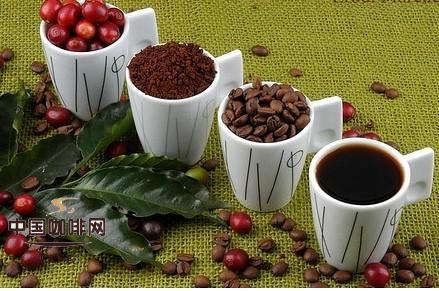
Variants of the coffee bean iron pickup family, like Dou Kona Blue Mountain.
The variety of the iron pickup family, the elephant bean "Maragogype", was discovered in the "Maragogype" producing area of "Bahia" in northeastern Brazil in 1870, hence its name because the bean is at least three times larger than the average Arabica, making it the largest in the world. It is the most well-known variety of iron pickup beans, is the giant baby of the iron pickup family. Elephant beans are very suitable for the low altitude area of 700 meters and 800 meters, but the flavor

Introduction to the variety and taste of coffee beans the variety of elephant bean coffee is known as the "giant" because of its large size.
Professional coffee knowledge exchange more coffee bean information please follow the coffee workshop (Wechat official account cafe_style) front street-Malaggippe varieties introduction Coffee tree is a flowering plant of the Rubiaceae coffee, there are about 120 species, ranging from small shrubs to 18 meters tall trees. Wild coffee species grow irregularly in the tropics, and new and new species have been found.

A very balanced method for describing the flavor of pointed bourbon coffee beans the characteristics of grinding degree and the taste of varieties in producing area
Pointed Bourbon (Bourbon Pointu): found in Bourbon Island in 1810, beans changed from round to pointed, with only half the caffeine content, but in small amounts, weak and extremely precious (mostly cultivated in the laboratory). Elephant bean (Maragogype, or Elephant Bean): the most famous variety of Tibica beans, first discovered in 1870 in the Maragogype bean-producing region of the state of Bahia in northeastern Brazil.

Common sense of grading coffee beans in coffee producing areas of Brazil
Compared with other producing countries in Central and South America, Brazil is significantly lower, with a larger proportion of estates less than 1000 meters. The landform here is flat and monotonous, lack of microclimate, and accustomed to unshaded tree (sun-exposed) planting, resulting in the development of Brazil's unique soft bean flavor-low sour taste, heavy nutty flavor, good chocolate sweetness and mellowness, but slightly woody and earthy, floral and
Brazil as the world's second largest coffee consumer is expected to overtake the United States in 2025
Professional coffee knowledge exchange more coffee bean information please follow coffee workshop (Wechat official account cafe_style) Brazil Coffee Industry Association (Abic) recently released data show that Brazil has become the world's second largest coffee consumer after the United States. Brazilian website Jornaldobrasil reported on May 13 that Abic data showed that in 2017, Brazil's domestic coffee consumption was 21.

The Cultural Story of the Origin and Development of Brazilian Coffee beans
Professional coffee knowledge exchange more coffee bean information please follow the coffee workshop (Wechat official account cafe_style) when the Portuguese discovered Brazil in 1500, there were only Indian settlements in the country.

Brazil Coffee production area Cerrado Hirado / Syrador Coffee cultivation Historical Story Flavor characteristics
Professional coffee knowledge exchange more coffee bean information please follow the coffee workshop (Wechat official account cafe_style) located in South America Brazil began to grow coffee in 1727. At that time, coffee seeds were smuggled by Francisco de Mello Palheta from the neighboring French colony (French Guiana) in northeastern Brazil. A. D. 1845

What are the varieties of Minas coffee beans in southern Brazil, the world's largest producer?
What are the varieties of Minas coffee beans in southern Brazil, the world's largest producer? Brazil is vividly likened to the giant and monarch of the coffee world, because the quantity is so large that it is sold as bulk goods. Small farmers now grow 75% of Brazil's total coffee production. Brazil has two or even three times as many coffee producers as Colombia, which is the second largest coffee producer in the world.

Boutique coffee growing areas: Brazilian coffee growing areas rating
Brazil is significantly lower in elevation than other producing countries in Central and South America, with a greater proportion of estates below 1,000 meters. The landscape here is flat and monotonous, lacks microclimate, and is accustomed to using non-shade tree (insolation) cultivation methods, thus developing Brazil's unique soft bean flavor-low acidity, nutty, chocolate sweet and mellow, but slightly woody and earthy, floral and

What are the flavor characteristics of Dewey dry River Manor in Brazil? What are the taste characteristics of bourbon?
What are the flavor characteristics of Dewey dry River Manor in Brazil? It is one of the 26 states of Brazil, and the northeastern provincial capital of the country is Salvador (El Salvador, which has the same name as the Central American country El Salvador). The state is close to the sea, has an export port, it is bordered by the Atlantic Ocean and Halloween Bay. Portuguese is Baia de Todos Os Santos, which is the natural harbor of Bahia state, up to 40 kilometers long.

Basic knowledge of boutique coffee beans rating of Brazilian coffee producing areas
Compared with other producing countries in Central and South America, Brazil is significantly lower, with a larger proportion of estates less than 1000 meters. The landform here is flat and monotonous, lack of microclimate, and accustomed to unshaded tree (sun-exposed) planting, resulting in the development of Brazil's unique soft bean flavor-low sour taste, heavy nutty flavor, good chocolate sweetness and mellowness, but slightly woody and earthy, floral and